
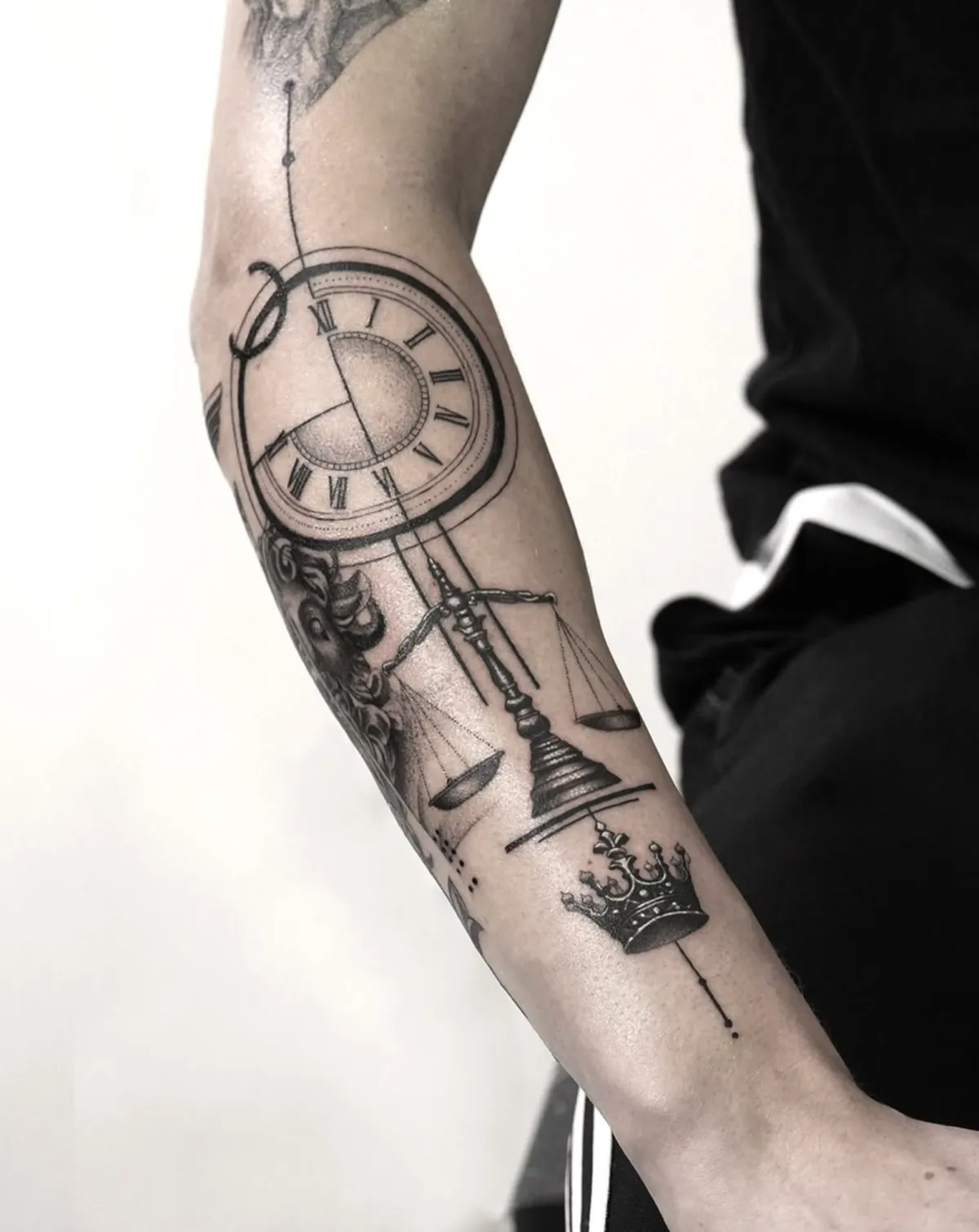
The Pressure to Go Faster
Early in my career, I felt the pressure. Every tattoo artist does at some point. Book more clients. Fill every hour. Stack appointments back to back with fifteen minutes between them to wipe down the station and start again. The math seems simple — more clients equals more income equals more success.
I tried it. For a brief period, I ran my schedule that way. And I learned quickly that the math is wrong. More clients in less time does not equal better work or a better life. It equals exhaustion, compromised quality, and clients who can feel that they are being processed rather than cared for.
So I stopped. I restructured everything about how I work, and I have never looked back.
What Rushing Actually Costs
Let me be specific about what happens when a tattoo session is rushed, because the costs are not always obvious.
Line quality suffers. This is the most technical and most visible consequence. Fineline work — which is a core part of what I do — demands a steady hand and absolute focus. When I am thinking about the next client waiting, when I am watching the clock, when my body is tired from a session that should have ended an hour ago, my hand is not as steady. The difference might be invisible to someone who does not tattoo, but I can feel it. And over time, as the tattoo heals and ages, those micro-imperfections become more apparent.
The client feels it. People know when they are being rushed. They might not say anything — most people are too polite to call it out — but they sense it. The energy shifts. The artist is checking the time. The conversation dries up. The stencil placement happens quickly instead of collaboratively. The aftercare instructions are rattled off instead of explained. The client leaves with a tattoo and a vague feeling that something was missing.
Creative decisions get compressed. Some of the best moments in a tattoo session are the spontaneous ones. A client sees the stencil and says, "What if we added a small detail here?" In a rushed schedule, the answer to that question is usually "we do not have time." In my schedule, the answer is "let me sketch that out and see how it looks." Those small additions and adjustments often become the client's favorite part of the piece.
Physical strain accumulates. Tattooing is demanding physical work. Holding a machine for hours, maintaining posture, focusing intensely on detail — it takes a toll. When I stack sessions without adequate rest, the fatigue carries over. My body hurts, my focus fades, and the clients in the later slots receive a diminished version of what I can offer. That is not fair to them.
How I Structure My Time
I typically book one to two clients per day, depending on the size and complexity of the work. For larger pieces, it is one client — a full day dedicated entirely to them. For smaller pieces, I might take two appointments with a generous break between them.
This might seem like poor business strategy. I understand why someone looking at a spreadsheet would think that. But here is what that schedule actually produces:
Every client gets my full attention. Not my divided attention, not my tired attention, not my watching-the-clock attention. My full, present, engaged attention from the moment they walk in until the moment they leave.
I arrive at each session rested and focused. My hands are steady. My mind is clear. I am not carrying the residual stress of a previous appointment that ran long. I am here, fully, for this person and this piece.
I would rather do one tattoo beautifully than three tattoos adequately.
The Stencil Conversation
One of the places where time makes the biggest difference is stencil placement. I have written about this before, but it bears repeating: stencil placement is one of the most important moments in the entire process. It determines how the tattoo interacts with the body's anatomy, how it moves when the person moves, how it looks from different angles.
When I am not rushed, stencil placement becomes a real conversation. We try one spot, look at it from multiple angles, discuss whether it should shift a centimeter to the left, go slightly higher, rotate a few degrees. Sometimes we apply and remove the stencil three or four times. Every adjustment matters because this decision is permanent.
In a rushed session, you get one, maybe two attempts at stencil placement before the artist needs to start tattooing to stay on schedule. That is a compromise I am not willing to make. Not for efficiency. Not for anything.
Breaks Are Not Weakness
There is a strange machismo in tattoo culture around long, uninterrupted sessions. Sitting for six hours without a break is treated as a badge of honor, and artists sometimes frame their ability to work marathon sessions without stopping as a sign of dedication.
I see it differently. Breaks during long sessions are essential — for the client and for me.
For the client, a break means a chance to eat, drink water, use the bathroom, move their body, and reset their pain tolerance. The human body is not designed to lie in one position for hours while being repeatedly punctured. A fifteen-minute break can make the difference between a client who powers through the last hour in misery and a client who finishes the session feeling strong.
For me, a break means stepping back, stretching my hands and back, looking at the piece from a distance, and assessing my progress with fresh eyes. Some of my best creative decisions have happened during breaks — seeing the piece from across the room reveals things I cannot see when my face is six inches from the skin.
I build breaks into every session over two hours. They are not optional. They are part of the process.
Quality Over Quantity Is Not a Slogan
I know "quality over quantity" sounds like something you would read on a motivational poster in a dentist's waiting room. But in tattooing, it is a genuine operational philosophy with real consequences.
When I choose to take fewer clients and spend more time with each one, several things happen:
My portfolio improves. Every piece gets the time it deserves, which means every piece represents my best work. I am not uploading photos of tattoos I know I could have done better if I had had another thirty minutes.
My clients are happier. Not just with the tattoo, but with the experience. They felt respected. They felt present in the process. They were not an appointment slot — they were a person with a story, and they had the time to tell it.
My body lasts longer. This is practical and real. Tattooing careers can be shortened by repetitive strain injuries, back problems, and eye strain. By pacing myself, I am investing in being able to do this work for decades, not just years.
My mental health is better. I end most days feeling fulfilled rather than depleted. I have energy left for my own creative projects, for my life outside the studio, for being a whole human being. Burnout is rampant in this industry, and I refuse to treat it as inevitable.
What This Means for You
If you are considering booking with me, here is what my approach means in practice:
Your appointment might be the only one I have that day. You are not competing with anyone else for my time or attention. We will start when we are both ready, take the time we need, and finish when the piece is right — not when the clock says we should.
I might have limited availability. Because I take fewer clients, my booking calendar fills up. I know that can be frustrating, and I appreciate your patience. The wait exists because I refuse to compress the time your tattoo deserves.
The price reflects the time. My rates account for the fact that I am giving you my full day, not splitting it across multiple appointments. When you invest in a tattoo with me, you are paying for dedicated time, genuine attention, and work that I am proud to put my name on.
A Final Thought
I was talking to a client recently — someone who had been tattooed by a lot of different artists over the years — and she said something that stuck with me. She said, "Most artists make me feel like a canvas. You make me feel like a person."
That is the difference time makes. Not just in the quality of the lines or the precision of the shading, but in how someone feels when they are in your chair. And that feeling, I believe, is worth every minute.