
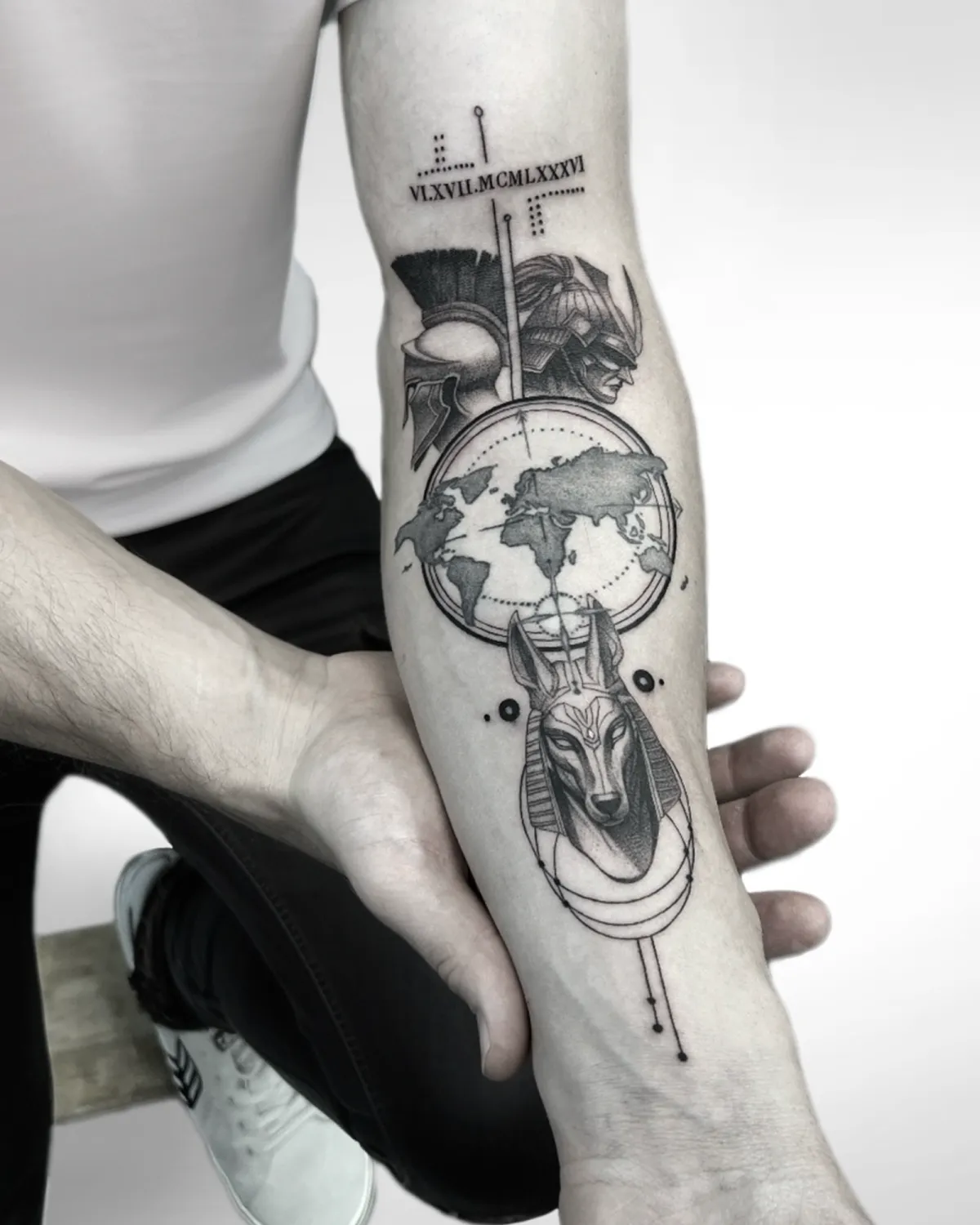
Walking Into Someone Else's Space
There's a specific feeling that hits me every time I walk into a studio that isn't mine. It's somewhere between the first day at a new school and the excitement of unwrapping something you ordered online. You don't quite know what you're going to get, and that uncertainty is the entire point.
Over the past few years, I've been lucky enough to guest-work at studios across Helsinki, Amsterdam, and Berlin. Each one operates differently. Each one has its own philosophy about what a tattoo studio should feel like, how clients should be treated, and how the day should flow. And every single time, I walk away having learned something I couldn't have picked up in my own space.
This isn't about one studio being better than another. It's about the fact that there are a hundred different ways to do this job well, and you'll never discover most of them if you only ever work in one room.
The Small Differences That Change Everything
The first thing I notice in any new studio is the setup. Not the decor — though that matters too — but the actual working setup. How the stations are arranged. Where the supplies are stored. How the lighting is positioned. These things sound trivial, but they have a huge impact on how you work.
At one studio in Amsterdam, I noticed the artist next to me had their workstation organized in a way I'd never considered. Their ink caps were arranged in a gradient from lightest to darkest, laid out in a curved line that followed their natural arm movement. It sounds like such a small thing, but it eliminated that half-second of searching for the right shade during a session. I adopted a version of that layout and it genuinely improved my workflow during long realism pieces.
In Berlin, I worked at a studio where they used a specific brand of barrier film that I'd never tried. It was thinner, more flexible, and easier to work with than what I'd been using for years. I switched to it permanently after that trip. A tiny change, but it made my setup faster and cleaner.
The best lessons from other studios are almost never dramatic revelations. They're small, practical adjustments that compound over time.
These micro-improvements are everywhere if you're paying attention. The way someone tapes down their stencil. The angle of the arm rest. The type of soap they use during a session. Individually, none of these things will transform your work. But stack them up over dozens of guest spots, and you've quietly optimized every part of your process.
Workflow and Pace
One of the most valuable things I've observed across different studios is how artists manage their time and energy throughout the day. This is something you rarely talk about openly, but it makes an enormous difference in the quality of your work and your longevity in this career.
In Helsinki, the pace tends to be measured and deliberate. Sessions are booked with generous buffers between them. There's time to reset, clean properly, eat something, and mentally prepare for the next client. I grew up with that rhythm, so it felt normal to me.
Then I worked at a studio in Berlin where the pace was significantly faster. Artists were booking back-to-back with minimal breaks, moving through smaller pieces efficiently without sacrificing quality. At first, it felt chaotic to me. But watching how they managed it — how they streamlined their consultations, how they prepped stencils in advance, how they kept their energy up — taught me a lot about efficiency.
I'm not saying faster is better. But seeing a different approach to pacing made me realize that my own pace had some inefficiencies I'd been blind to. Now I'm somewhere in between — I still keep buffers for larger pieces, but I've tightened up my workflow for smaller fineline and design tattoos in a way that lets me take on more work without burning out.
Client Management Is an Art in Itself
Every studio handles clients differently, and this is where I've probably learned the most. The way you greet someone when they walk in, how you discuss the design, how you manage expectations, how you handle the aftercare conversation — all of these touchpoints shape the client's entire experience.
At one Amsterdam studio, I watched the owner do something I'd never seen before. When a client came in for a consultation, he didn't immediately start sketching or pulling up references. He spent the first ten minutes just talking with them. Not about the tattoo — about them. What they did, what they were into, what brought them to the shop that day. By the time they got to the actual tattoo discussion, there was a real connection. The client felt heard, and the design conversation was richer because of it.
I started incorporating a version of that into my own process. Not as a technique or a script, but as a genuine practice of curiosity. When I actually get to know someone before we discuss the piece, the whole dynamic shifts. They trust me more. They're more open to my suggestions. And the final result tends to be more personal and meaningful because I understand what they're really after, not just what they described in a booking form.
Another studio I visited in Berlin had an incredibly structured aftercare process. Every client received a printed aftercare card with detailed instructions, a QR code linking to a video walkthrough, and a follow-up email three days later checking in on healing. That level of care after the session made a real impression on me. I've since built out my own aftercare system that's more thorough than what I used to do, and I've had noticeably fewer healing issues and much more client satisfaction as a result.
Techniques You Can't Learn From Videos
The internet is full of tattoo tutorials, process videos, and technique breakdowns. I've watched plenty of them, and they're useful to a degree. But there are things you can only learn by sitting next to another artist and watching them work in real time.
During a guest spot in Amsterdam, I spent a slow afternoon watching a realism artist work on a portrait piece. What struck me wasn't his technique with the machine — it was how he approached the shading. He built up layers far more gradually than I did, using lighter passes and more patience. His results had this depth and smoothness that I'd been struggling to achieve in my own realism work. Watching him in person, seeing how gentle his hand pressure was, how he let the skin rest between passes — that taught me more in two hours than months of YouTube tutorials.
At another studio, I watched an artist do a cover-up consultation that completely changed how I approach cover-ups myself. Instead of focusing on what to hide, she focused on what the client wanted to see. She'd lay tracing paper over the existing tattoo and start drawing the new piece on top, showing the client in real time how the old tattoo would become part of something new rather than just being buried. That reframing — from hiding to transforming — is now central to how I handle every cover-up project.
You can study technique endlessly on a screen. But sitting next to someone while they work, breathing the same air, watching their hands move — that's where the real transfer of knowledge happens.
Studio Culture and What It Teaches You About Yourself
Beyond the technical lessons, every studio reveals something about its own values, and those values hold up a mirror to your own.
Some studios I've visited are intensely focused on artistry. The walls are covered in original paintings, the artists are constantly sketching, and there's an atmosphere of creative ambition that's almost electric. Those environments push me to think bigger and take more risks with my designs.
Other studios are focused on hospitality. The client experience is prioritized above everything. The space is warm, the team is welcoming, and every detail is designed to make people feel comfortable. Those environments remind me that we're in a service industry, and the best tattoo in the world doesn't matter if the person getting it feels anxious or unwelcome.
And then there are studios that feel like families. The artists eat together, joke together, support each other's work, and genuinely care about each other. Those environments remind me that this career can be isolating if you let it, and that community matters.
I take something from each of these cultures and try to weave it into my own practice. I want my work to be artistically ambitious, my client experience to be warm and thoughtful, and my relationships with other artists to be genuine and supportive. I wouldn't have articulated that clearly if I hadn't seen each of those values modeled so well in other studios.
The Tattoo Community's Generosity
What still surprises me, even after years of doing this, is how generous the tattoo community is. When I reach out to a studio about a guest spot, I'm essentially asking to come into their space, use their resources, and serve clients in their city. And overwhelmingly, the response is welcoming.
Artists share their techniques freely. Studio owners open their doors to visitors. There's a genuine belief in this industry that rising tides lift all boats — that when one artist gets better, the whole scene benefits. I don't take that for granted.
Every guest spot I do reinforces something I believe deeply: the best way to grow is to stay humble, stay curious, and keep walking into rooms where you're not the most experienced person. The day I stop learning from other studios is the day I should stop doing guest work. And I don't see that day coming anytime soon.
If you run a studio and you're open to guest artists, thank you. You're not just offering a workstation — you're offering an education. And if you're a tattoo artist who hasn't done a guest spot yet, I promise you this: you'll come home better than you left.